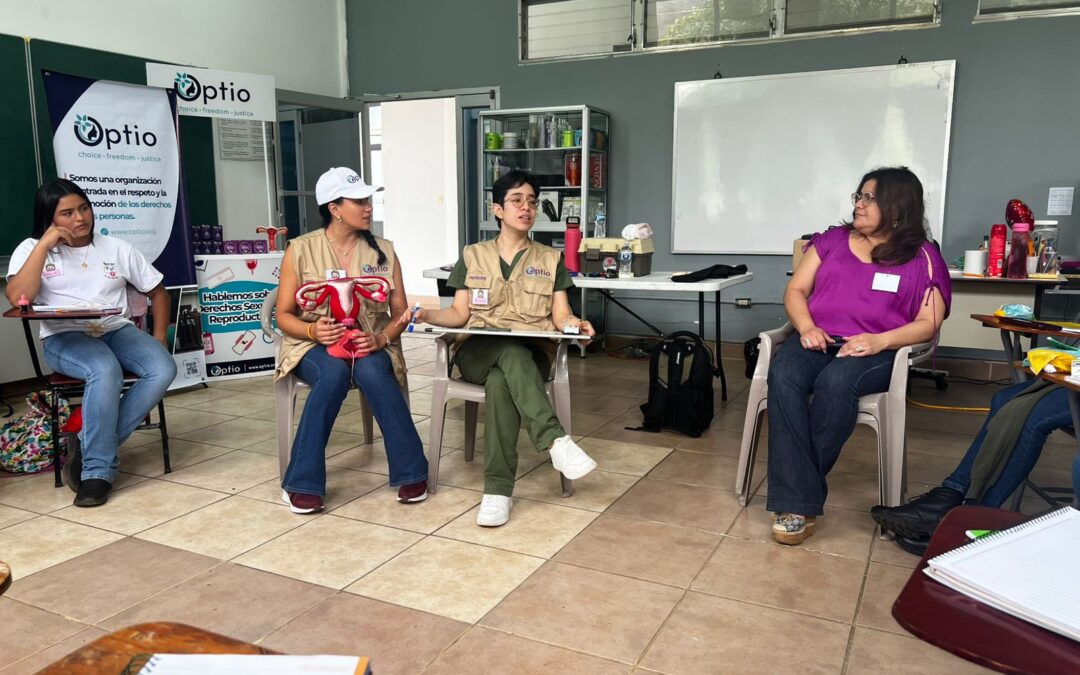
In March, in partnership with Ashonplafa, Optio worked directly with communities in Olancho, Honduras, to expand access to emergency contraception (EC). In just one week, we distributed over 200 EC pills to women and young people, provided supplies to local clinics and municipal partners, and engaged nearly 200 participants through interactive community sessions. Alongside distribution, we shared clear, practical information about how EC works, when to use it, and where to access it—ensuring that people not only have the method, but also know how to use it effectively.
This work is especially important in Honduras, where emergency contraception was only legalized four years ago, after a 14-year ban, and where current political shifts threaten to roll back that progress. Access remains fragile. Misinformation, stigma, and limited availability continue to prevent many women and girls, especially in rural areas, from getting EC when they need it most.
Our approach focuses on both immediate access and long-term resilience: expanding availability today while helping communities navigate future challenges. In addition to sharing information about EC, we also shared information about the Yuzpe method—a safe, evidence-based alternative that uses regular birth control pills as emergency contraception—so that women and healthcare providers are aware of backup options if dedicated EC products become restricted again.
This initiative reflects Optio’s broader commitment to expanding and protecting access to emergency contraception across Latin America. By combining community-based distribution, education, and strong local partnerships, we are building sustainable pathways to care—enabling women and young people to make informed decisions about their health, regardless of the legal or political context.
Recent Comments