
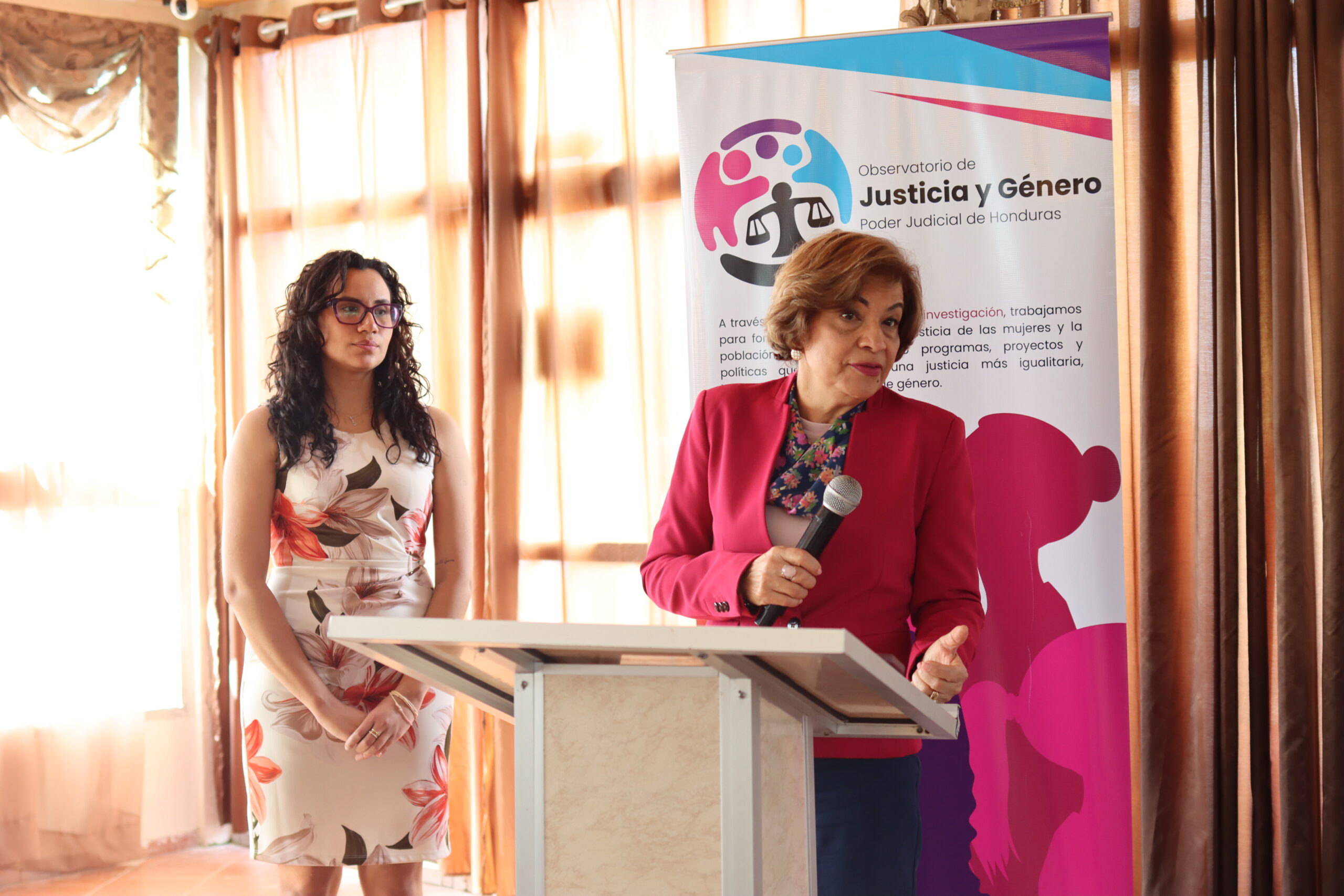
From November 26–27, 2025, judges and magistrates from across Honduras participated in a two-day accredited training led by Optio to strengthen the application of human rights and gender perspectives in judicial decision-making. The program brought together members of both the Criminal and Administrative Litigation courts for a series of intensive, practice-oriented sessions.
Led by international experts—including Claudia Martin—the training focused on how judges can more effectively apply constitutional and international human rights standards in their rulings. Participants engaged with key concepts such as gender-sensitive adjudication, the elimination of harmful stereotypes, and the judiciary’s role in upholding equality.
Breakout sessions allowed for deeper, specialized learning. In the Administrative Litigation track, discussions centered on the power imbalances between citizens and the state, with hands-on exercises in evaluating evidence and drafting judgments through a gender lens. In the Criminal Jurisdiction track, participants examined obstetric emergency cases, drawing on regional legal precedents such as Manuela v. El Salvador to ground the analysis.
The training was further enriched by contributions from judges in Argentina, who shared comparative perspectives and practical insights from their own judicial experience.
Recent Comments