
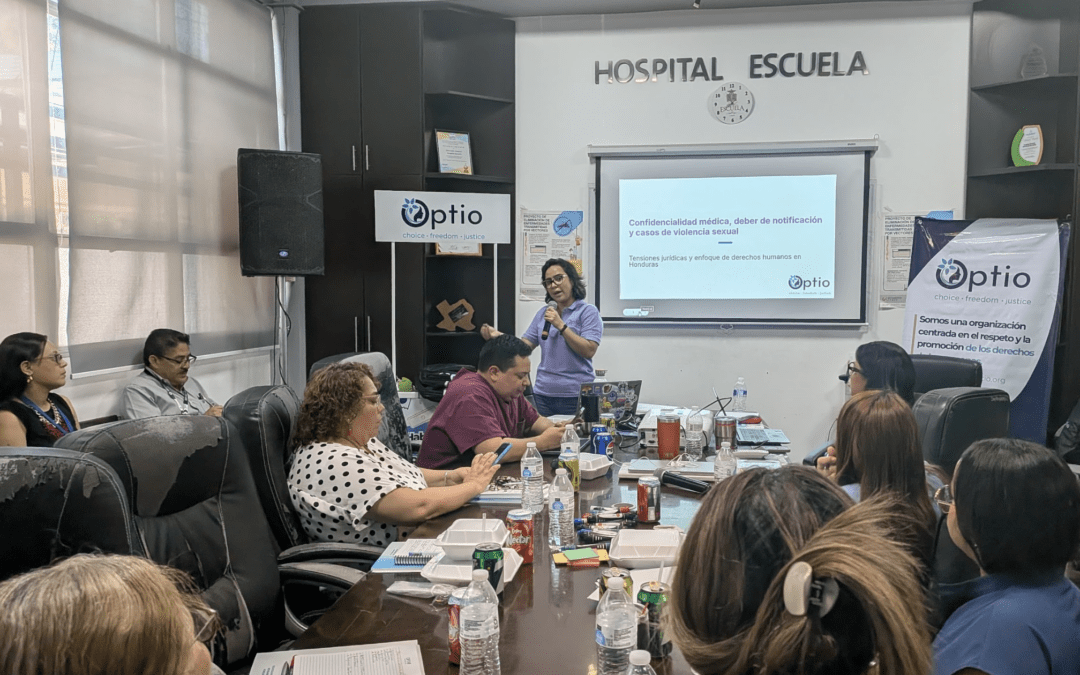
Providing timely, compassionate, and comprehensive care to survivors of sexual violence is essential to protecting their health, dignity, and rights. To strengthen the quality of care available in Honduras, Optio recently conducted a training on the National Protocol for Comprehensive Care of Victims and Survivors of Sexual Violence for healthcare professionals from the Honduran Ministry of Health (SESAL) and the Hospital Escuela Universitario (HEU).
The training brought together professionals from across the health sector to strengthen their capacity to implement the national protocol and ensure that survivors receive safe, timely, and rights-based care. Particular emphasis was placed on incorporating age-appropriate and gender-responsive approaches while reducing the risk of revictimization within healthcare settings.
The initiative responds to the high prevalence of sexual violence in Honduras and the need to strengthen and standardize the immediate health-sector response for survivors. By reinforcing clinical, legal, and psychosocial aspects of care, the training sought to improve the quality and consistency of services provided across health facilities.
Participants explored key components of comprehensive care, including immediate clinical management, prevention and treatment of sexually transmitted infections, HIV and Hepatitis B prophylaxis, access to emergency contraception, preservation of medico-legal evidence, psychosocial counseling, and referral and follow-up mechanisms. The training also strengthened tools for clinical documentation, internal care pathways, and continuous quality improvement.
In addition, participants examined the biological, psychological, and social consequences of sexual violence, including unintended pregnancies, sexually transmitted infections, anxiety, depression, and increased risk of self-harm. Discussions also addressed persistent barriers to care, including myths, stereotypes, stigma, and practices that can contribute to revictimization.
Participants highlighted the value of the training in strengthening both technical knowledge and practical skills. One attendee noted:
“The information shared during the legal sessions was essential in addressing gaps in our understanding of the legal framework and the proper completion of medical records in cases of sexual violence.”
The training produced encouraging results. More than 40 percent of participants demonstrated improvements in their knowledge and attitudes, including stronger understanding of the legal framework, greater confidence in applying care pathways, and increased knowledge of emergency contraception and comprehensive survivor-centered care.
The process also generated practical recommendations for strengthening the health system, including proposals to incorporate sexual diversity education into medical training programs and the development of an institutional care flowchart adapted to existing capacities and resources.
By strengthening the knowledge, skills, and confidence of healthcare providers, these efforts contribute to a more informed, coordinated, and compassionate response for survivors of sexual violence—helping ensure that those seeking care are met with support, respect, and protection rather than stigma or revictimization.
Recent Comments